
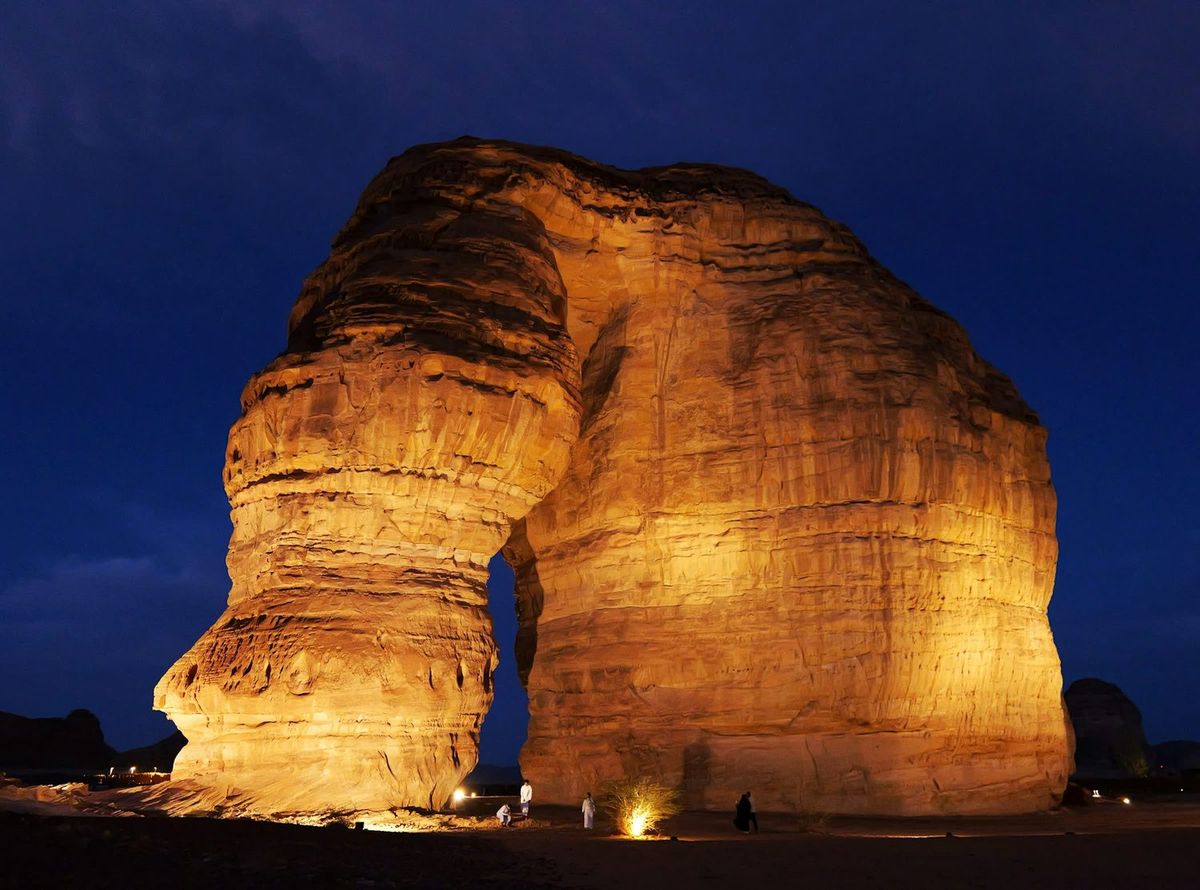
Rock formation AlUla
Elephant Rock. Jabal AlFil.
A fifty-two-metre sandstone monolith weathered into the shape of an elephant, twenty minutes from AlUla Old Town and best seen after the sun has gone.
Elephant Rock at a glance
- Where
- AlUla, off the road north-east of the Old Town
- From AlUla Old Town
- About 20 minutes
- Height
- About 52 metres
- Best time
- Late afternoon into the evening
Elephant Rock, in detail
The rock itself
Jabal AlFil is a single mass of red sandstone standing about fifty-two metres out of open sand, weathered over millions of years into something with a body, a raised trunk and legs. The resemblance is not approximate; it looks like a rendering until you are standing under it.
It sits on its own, which is most of the effect: no cliff behind it, no other outcrop nearby, just sand and then this.
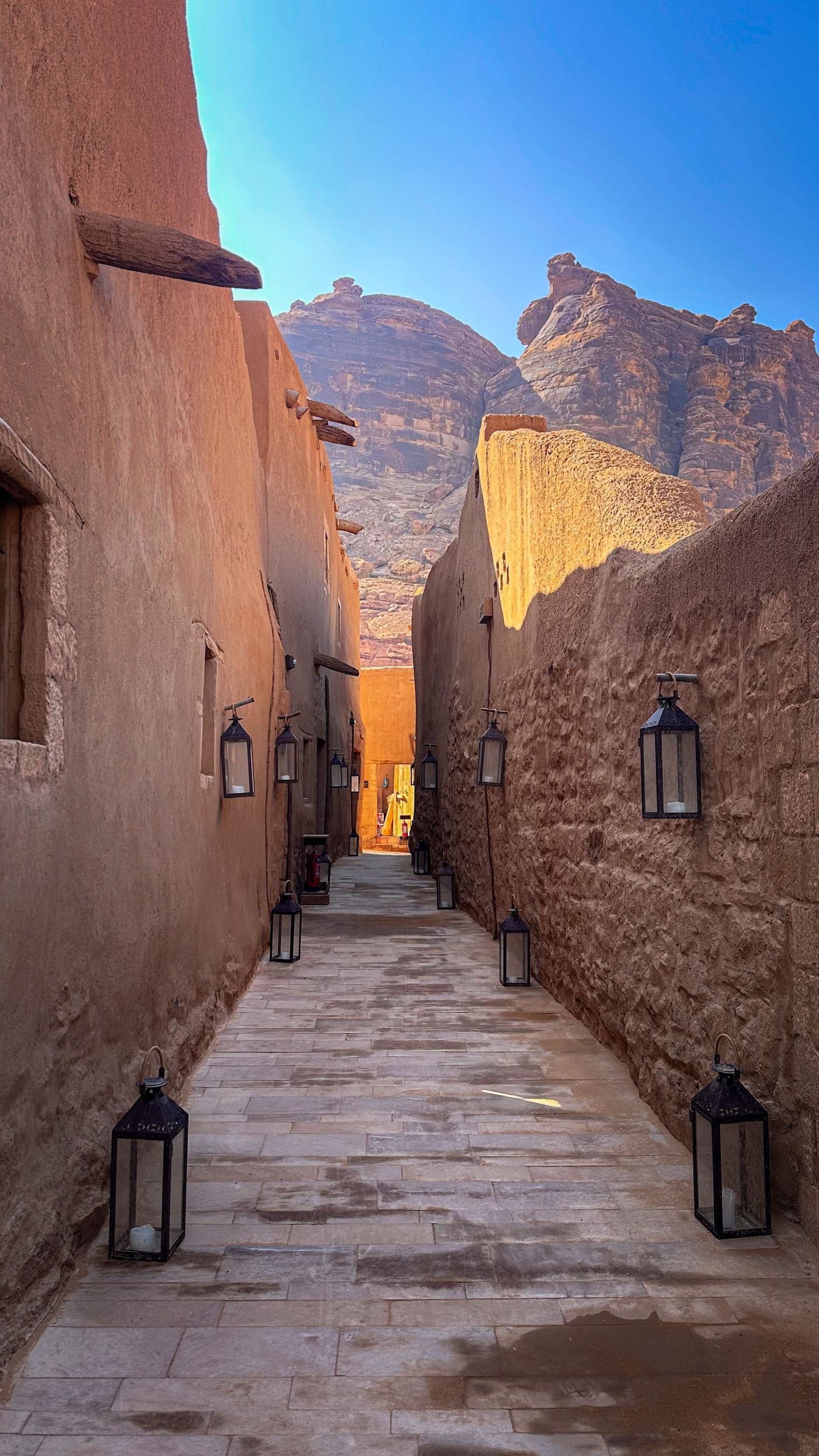
It is twenty minutes north-east of AlUla Old Town on a good paved road, and it is the most photographed thing in a valley that also holds a UNESCO site.
Why it is an evening
The site opens in the late afternoon and runs into the night, and it is built around that. Sunken seating areas in the sand, fire pits, food trucks and music, with the rock floodlit once the light goes.
So this is not a ten-minute photo stop. Most visitors arrive before sunset for the light on the sandstone, then stay two or three hours after dark, because the place turns into somewhere to sit rather than somewhere to look at.
There is a wooden walkway from the car park in, and parking is free. The chauffeur waits, which matters here more than usual: AlUla is spread out and there is nothing else within walking distance.

Where it fits in an AlUla trip
Elephant Rock is the evening. Hegra, the Nabataean tombs and the Kingdom's first UNESCO site, is the morning, and the Old Town, Dadan and Jabal Ikmah fill what is between them.
Because those sites are twenty to forty minutes apart on quiet roads, AlUla is a place where having the car and chauffeur for the whole day is the difference between seeing three things and seeing six.
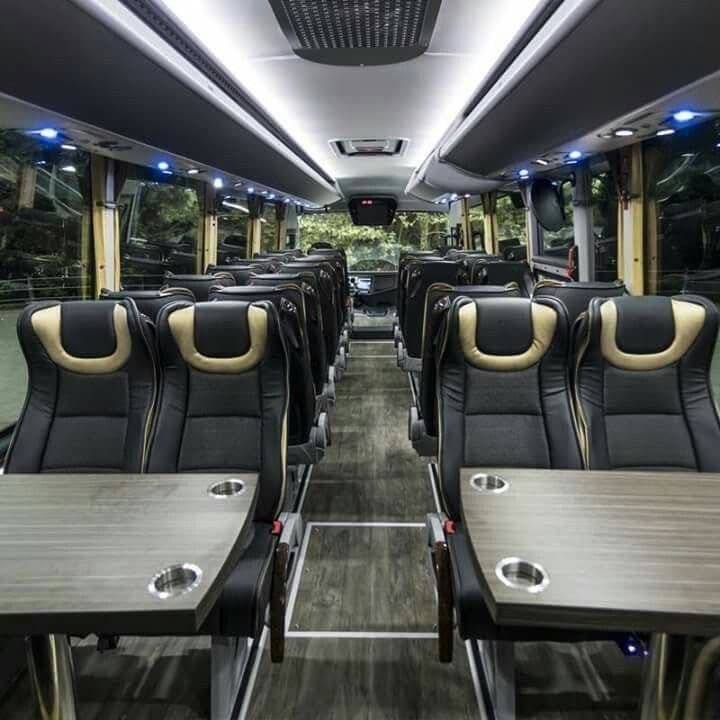
Groups travel together in a van or coach; a couple or a family takes an SUV. Either way the day is booked as hours rather than as journeys.
On the day What there is to do
Worth doing while you are there.
Arrive before sunset
The last hour of daylight on red sandstone is the reason to time it. Then the floodlighting takes over and it changes character entirely.
Take the sunken lounges
Seating cut into the sand around fire pits, facing the rock. Free to use and the reason people stay for hours.
Eat at the trucks
Food and coffee on site, informal, and enough to make this the evening rather than something before dinner.
Walk right around it
The formation reads completely differently from the back. Five minutes on foot and most of the crowd is out of frame.
Stay for the stars
AlUla's skies are dark and the desert is quiet once the music stops. Worth the extra half hour before the drive back.
Pair it with Hegra
Tombs in the morning, the rock in the evening. That is the standard AlUla day and it needs a car all of it.
Sunset at the rock, and the evening after it.
Send the date and roughly how the day should go. The car, the chauffeur and one all-inclusive price come back in writing, and the itinerary stays yours to change on the day.
Before you ask Elephant Rock
Asked, answered.
About twenty minutes north-east on a paved road, with clear signage. Free parking at the site and a wooden walkway from the car park to the seating area.
It opens in the late afternoon and runs into the night, and it is lit once the sun goes. Times shift with the season, so the coordinator confirms them against your date.
About fifty-two metres high, standing alone out of open sand. The isolation is a large part of the effect, as there is no other outcrop near it.
Two to three hours is normal. There are sunken seating areas with fire pits, food trucks and music, so most visitors arrive for the sunset light and stay well into the evening.
It is the sensible way to do it. The sites are twenty to forty minutes apart with nothing in between, so a car held for the day is the difference between seeing three of them and seeing six.